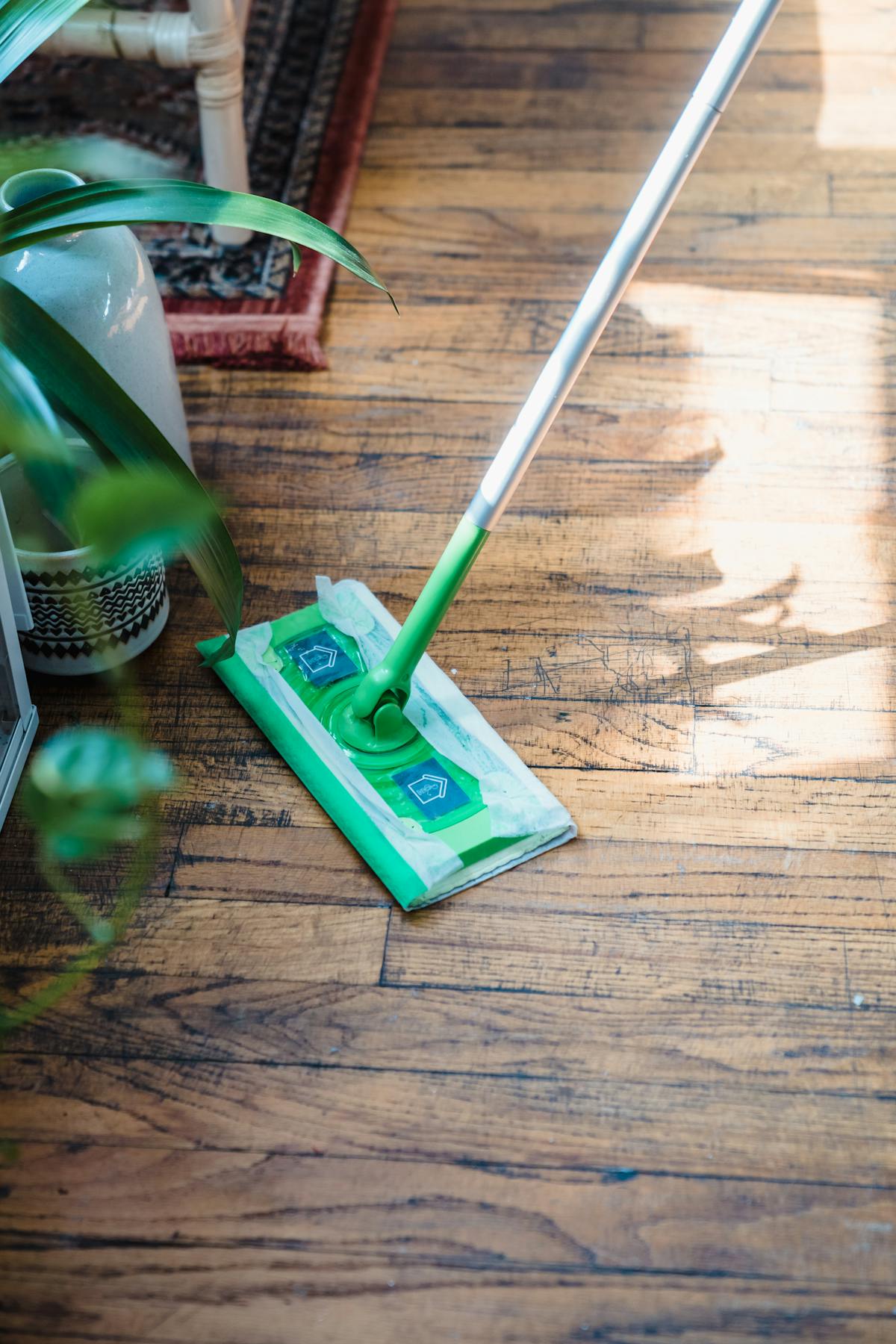
Kitchen floors deal with a unique combination of crumbs, dust, cooking oils, food splashes and tracked-in dirt. If you only mop when the floor looks obviously dirty, grease and residue can gradually build up. A short routine after cooking, followed by regular deeper cleaning, is usually easier than trying to remove a large amount of buildup later. Quick answer Let spills cool when necessary, remove crumbs and loose debris, then spot-clean greasy areas with a cleaner suitable for the flooring. Finish with a properly prepared floor-cleaning solution and a clean mop. Avoid soaking the floor and never mix cleaning chemicals.
Why kitchen floors get greasy
Cooking creates tiny droplets of oil and food residue that can settle beyond the immediate cooking area. Foot traffic then spreads that residue across the floor. Around a range, island or dining area, repeated small spills can create a thin film that attracts more dirt. Materials Needed Use a broom or vacuum, microfiber cloths, a clean mop, a bucket and a floor cleaner appropriate for the surface. Keep paper towels or washable cloths available for immediate spills. A soft non-abrasive sponge can help with localized residue. Step-by-Step Instructions 1. Pick up large debris. Remove crumbs, packaging pieces and food particles before adding water. 2. Sweep or vacuum. Cover the entire kitchen, paying special attention to the area around the stove, sink, refrigerator and trash bin. 3. Spot-clean grease. Use a suitable surface cleaner on greasy patches according to its label. Do not scrub aggressively on delicate finishes. 4. Prepare your floor solution. Follow the manufacturer's dilution directions for your floor cleaner. Stronger is not automatically better. 5. Mop in sections. Start in the cleaner area and work toward the exit. Rinse the mop as needed so dirty water is not spread around. 6. Check high-risk areas. Look again around the stove and sink after the first pass. These zones may need a second targeted clean. 7. Dry and reset. Allow the floor to dry before replacing mats or returning heavy traffic to the area.
How to handle a sticky kitchen floor
A sticky feeling can come from cooking grease, spilled drinks or excess cleaning product. Start by identifying the source. If cleaner residue is suspected, review whether too much product was used and whether the label calls for a rinse. If grease is present, use a product specifically intended for the flooring and grease type.
What NOT to Do
Do not pour large amounts of cleaner onto the floor. Do not use abrasive powders or metal scrubbers on finishes that can scratch. Never mix bleach with ammonia, acids, vinegar, toilet cleaner or other chemicals. Do not use a bathroom or toilet product on a kitchen floor unless the manufacturer specifically says the product is suitable for that surface. Safety and Material Warnings Keep people and pets away from wet floors. Ventilate the room when product directions call for it and follow label precautions. Flooring materials vary, so check care instructions before using a new chemical. Be especially careful with wood, laminate, natural stone and specialty finishes.
Daily versus weekly kitchen floor cleaning
A daily reset can be as simple as removing crumbs and wiping fresh spills. High-use households may benefit from frequent dry cleaning and spot cleaning. Wet mopping can be scheduled according to traffic, cooking activity and visible residue. A deeper clean can focus on edges, under movable appliances and areas that are missed during quick daily passes.
How to prevent kitchen floor buildup
Clean spills quickly, use washable mats in appropriate locations and keep the area around the cooking station free of accumulated debris. Regularly clean the mop itself because a dirty mop can transfer grease back to the floor. If a mat is used near the sink or stove, clean it according to its care instructions rather than allowing moisture and food residue to collect underneath. Maintenance Tips Inspect the floor from different angles after it dries. A floor that looks clean while wet can reveal residue after drying. Keep a simple cleaning kit nearby so small spills are dealt with immediately. Clean under movable furniture and appliances periodically, because hidden crumbs and grease can eventually become odor sources. FAQ What is the best way to clean a greasy kitchen floor? Remove loose dirt first, then use a flooring-compatible cleaner according to its label and mop with clean equipment. Why is my kitchen floor still sticky after mopping? Excess cleaner, grease or incomplete rinsing can contribute. Review the product directions and clean the affected area again appropriately. Should I sweep before mopping? Yes. Removing dry debris first reduces the amount of dirt spread by wet cleaning. Can I use any household cleaner on tile? Not necessarily. Check the label and tile manufacturer's care guidance. A clean kitchen floor does not require a complicated process. The most effective routine is consistent: remove dry debris, address grease and spills, use the right product at the recommended concentration, mop with clean equipment and avoid excessive water. A few minutes of maintenance after cooking can make the weekly deep clean much easier.