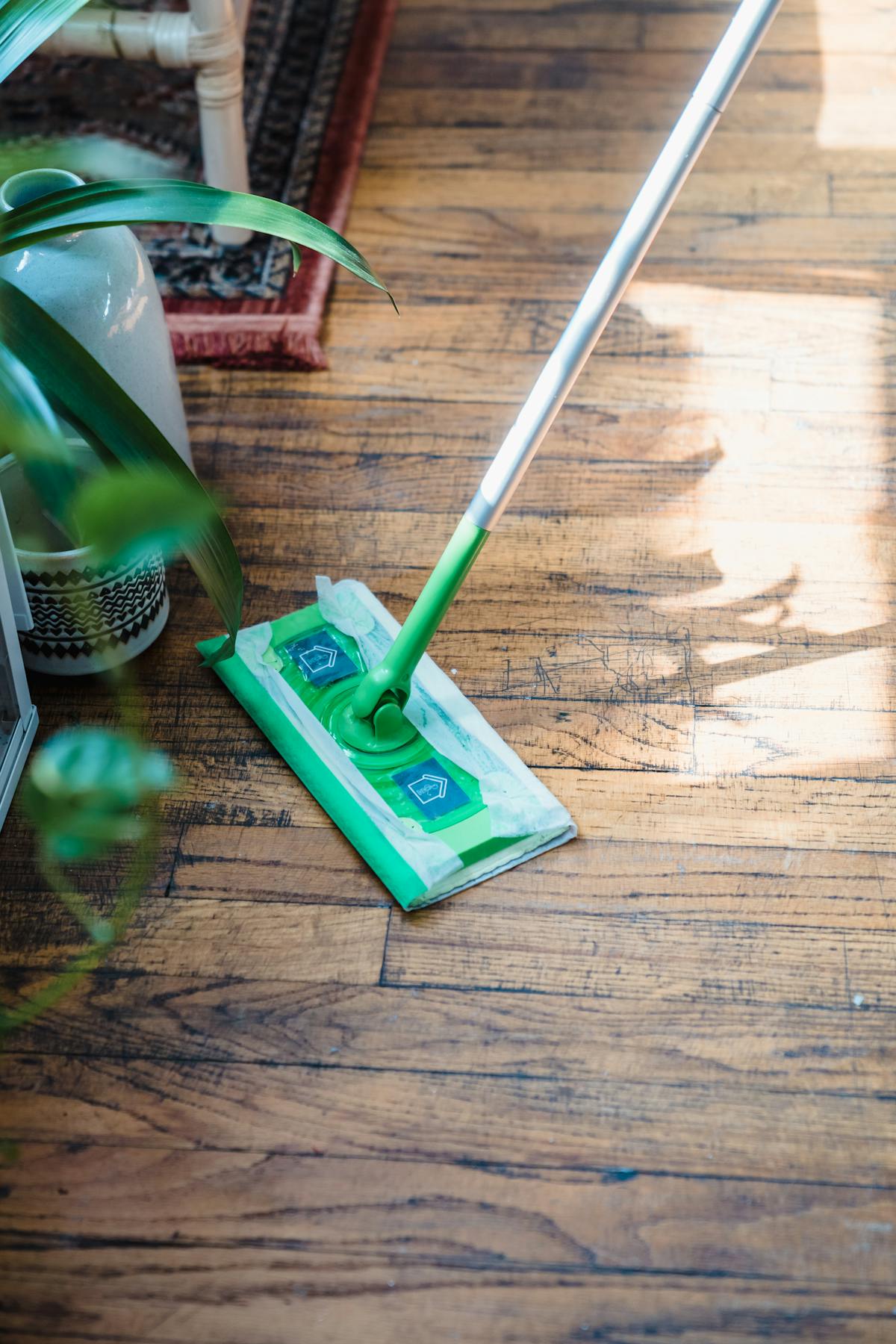
If you have pets or young children, it is understandable to want a floor-cleaning routine with a short ingredient list. But non-toxic does not mean that every homemade mixture is safe for every floor. Hardwood, luxury vinyl plank, laminate, tile and natural stone all have different care requirements. The safest DIY cleaner is the simplest one that matches the manufacturer's instructions. The Quick Answer For many sealed floors, start with warm water and a clean microfiber mop. If more cleaning power is needed, a very small amount of mild dish soap can work on compatible surfaces. Avoid vinegar on natural stone and avoid soaking hardwood, laminate or vinyl plank seams. 1. Plain Warm Water For dust, footprints and light daily soil, plain warm water is often enough. Vacuum or sweep first, then use a well-wrung microfiber mop. This approach leaves very little residue and is easy to use around pets. 2. Mild Soap Solution Add a small amount of mild, fragrance-free dish soap to a bucket of warm water. Use only enough to loosen ordinary grime; excessive soap can leave a film. Mop with minimal moisture and follow the floor manufacturer's drying guidance. 3. Diluted Vinegar for Compatible Surfaces A diluted vinegar solution is sometimes used on sealed ceramic or porcelain tile, but it is not a universal floor cleaner. Do not use vinegar on marble, limestone, travertine or other acid-sensitive stone. It can also be unsuitable for some finishes. Check manufacturer instructions first. 4. Castile Soap, Used Carefully Castile soap can be useful for some cleaning tasks, but more is not better. Too much soap may leave residue, and mixing it with acidic ingredients can create an ineffective or messy solution. If you use it, keep the concentration low and test an inconspicuous area. 5. The Low-Product Cleaning Routine Sometimes the most eco-friendly routine is not another recipe. Vacuum regularly, place mats at entrances, clean spills promptly and mop with minimal water. Fewer products mean fewer residues, fewer bottles and fewer opportunities to damage a finish. Pet and Baby Safety Keep pets and children away while a floor is wet, and allow the surface to dry before normal activity. Do not add essential oils simply to make a cleaner smell stronger; concentrated oils can irritate pets and may leave a slippery residue. Store all ingredients securely.
What Not to Mix
Never mix bleach with vinegar, ammonia or other household cleaners. Homemade does not automatically mean harmless. If a label gives a specific warning, follow it. FAQ
What is the safest DIY floor cleaner?
For many sealed floors, plain water or a very dilute mild-soap solution is a reasonable starting point, provided it matches the floor manufacturer's instructions.
Can I use vinegar on vinyl plank flooring?
Do not assume it is safe. Check the flooring manufacturer's care instructions because vinyl products and protective finishes vary. Are homemade cleaners better for pets? Not automatically. A simple formula can reduce unnecessary ingredients, but pets should still be kept away from wet floors and concentrated cleaning substances.